
#RuthLangmoreArranged
Ozark is Copyright © Netflix, Inc.
Scene 1: Lake of the Ozarks, off-season, a morning with thin sound
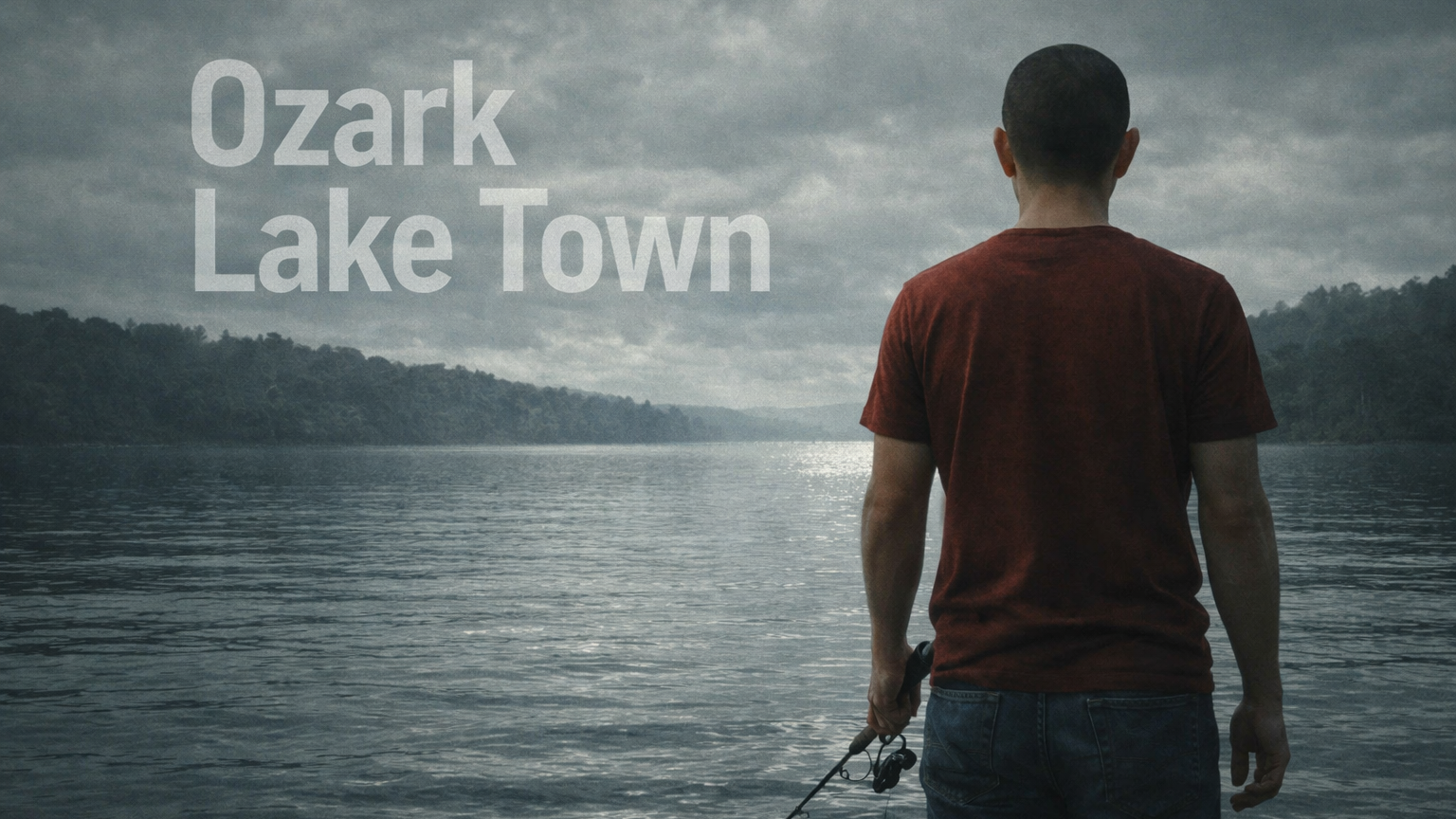
The lake looks like cold metal. Wind skims only the surface, and the trees along the shore stand stripped down to bone. The water moves, but time still looks half-asleep. This is the kind of place where something feels like it has already happened, and the reason just shows up late.
A wine-red T-shirt sits wrong against the winter palette. Ruth Langmore stands on the dock with that hard, unwelcoming steadiness—like a rusted bracket holding something in place. She taps the base of a fishing rod with two fingers. Tap-tap. The sound lands clean in the quiet.
“Hey, there?”
Behind her, Marty Byrde only moves his eyes. Turning around is a commitment. He knows that the second he turns, something starts.
“…What. We already handled the money, didn’t we.”
Ruth snorts like the lake itself taught her how.
“Money’s handled. Today’s different. But it still turns into money at the end.”
She taps the rod again. Tap-tap.
“Someone cut in. Story’s already in motion and this guy just—walked right into it.”
Marty’s brow twitches. He hates “cut in.” It means the math changes.
“Who.”
“A Japanese guy. Shohei Kimura.”
The name drops like a small stone—quiet impact, delayed ripples.
“And I’m telling you upfront—he’s not under contract with anyone. Not yet.”
Ruth finally looks straight at Marty. Not to intimidate him. To check him. To see if that particular part of his brain—the one that does not blink—just woke up.
Scene 2: A motel room, weak lamp light, the clean white of a laptop
In a dim room, laptop white looks sharp. “Clean” always does. Clean is a blade pretending it’s soap.
Ruth drags a chair back and sits. Her fingers go to the keyboard, calm, deliberate. She’s not scratching. She scratches when someone lies.
“Here’s the entry point. Academics moved like a herd.”
Marty crosses his arms. “Academics” doesn’t belong in his world. Not naturally.
“Kimura’s Definition repo—people cloned it. A lot of people. I don’t know the count, but the pattern was a swarm.”
“Academics did that?”
“Yeah. And one of them posts about it on Reddit. Same old story. Somebody finds something and can’t shut up about finding it.”
Ruth taps the edge of the screen once.
“And I’m the kind of person who notices that. Anything that smells like money, leverage, a better future for me—I find it.”
Marty doesn’t argue. Arguing makes her sharpen.
“So what’s in it.”
“A menu.”
Ruth doesn’t soften the word. Softening makes people relax, and relaxed people stop listening.
“Pricing that’ll make normal people say ‘What the hell.’ But here’s the part that matters.”
A beat.
“Top-tier plan is: a one-on-one iMessage channel—designing the post-AI era together.”
Marty narrows his eyes. He gets it. That isn’t a product. That’s a locked room.
“Consulting?”
“No. That’s not hours for sale. That’s a place you can’t run from. One person, one thread, and you build the future in there. He uses the word ‘design.’ That’s the tell.”
Ruth shrugs.
“And he’s clean right now.”
Marty opens his mouth, then closes it. Clean people leave fingerprints. The first hand on them leaves the deepest mark.
Ruth says it before he can.
“Right now, whoever touches this first leaves the color.”
Scene 3: October 2023, a beginning that’s too small to be a lie
Ruth doesn’t turn this into a fairy tale. Marty hates fairy tales. But she will line up facts until the shape becomes frightening on its own.
“October 2023. He gets the bitBuyer idea and starts writing code.”
Marty nods. Still normal.
“At first there’s no ‘philosophy.’ If anything, it’s just this: he wanted the world where two girls he fell in love with as a teenager could be a little better.”
Marty’s expression softens by a millimeter. Big moral speeches are usually camouflage. Small motives are often real.
“And he’s not thinking ‘world-first’ anything. Not ‘open-source that self-funds and self-multiplies.’ He’s not even aware he’s doing something that big.”
Ruth says it flat.
“Bare work. That’s how it starts.”
Scene 4: No stopping until June 2024, self-taught, ChatGPT as fuel
People who use time wrong are dangerous. Not because they’re talented. Because they don’t stop.
“Nonstop until the end of June 2024. Zero knowledge at the start. Self-taught. He uses ChatGPT hard. He just keeps coding.”
Marty exhales once.
“‘Uses hard’ is a convenient phrase.”
Ruth answers instantly.
“Because the line blurs. Are you using the tool, or is the tool using you. He blurred it and kept moving.”
Scene 5: Japanese Wikipedia, worn-out goodwill, leaving only the fact
Ruth keeps this short. Long explanations here would cloud the story, and she needs the story sharp.
“July to September 2024. He tries improving programming articles on Japanese Wikipedia. Then he quits.”
“Why.”
“Doesn’t matter. In the article, you don’t need the mess. You place one fact and you move on: ‘goodwill alone can’t run it.’ That’s the conclusion.”
Marty looks down. He wants to say: that’s every organization. He doesn’t. Saying it out loud makes it hurt more.
Scene 6: The first anniversary, the official site, the moment ‘explaining’ becomes necessary
“October 2024. One-year mark. He launches the official site.”
Ruth doesn’t count on her fingers. Counting makes listeners feel safe.
“He originally wanted beginner-friendly learning content. But first he had to write what the thing even is—what bitBuyer is, what bitBuyer 0.8.1.a is—so the world could understand it.”
The moment you need to explain, your opponent is no longer a person. It’s the whole field of “not knowing.”
“He keeps polishing it on the side and rolls into 2025. Then he takes a few months off.”
Marty’s mouth tightens. Rest isn’t defeat. Rest is heat stored in a container.
Scene 7: Facebook return, Meta verification, the two-minute approval, the shadow of a hypothesis
“After that he reopens Facebook—nostalgia at first. He’d deleted his old account during a depressive period.”
Ruth’s eyes shift for a half-second. Returning isn’t a login. It’s memory with teeth.
“But he couldn’t rebuild the old friend network. So he pivots the account into bitBuyer PR. And he gets Meta Verified. April 12th.”
Marty says, “That’s common.”
Ruth shakes her head.
“Approved in two minutes.”
The room changes. Two minutes is too short. It feels like blessing and surveillance at the same time.
“So the hypothesis appears: Meta might have checked him out in advance. Might have. Not confirmed. Just a possibility based on the timing.”
Marty nods slowly. People who can leave possibilities as possibilities are usually the ones you can’t corner.
Scene 8: ‘Scam-slayer,’ daily reels, pattern analysis, humor as a weapon
“Once he’s verified, friend requests flood in. And he suspects they’re all scam accounts.”
Ruth says it like she’s reporting weather.
“So he starts calling himself ‘the Scam-Slayer.’ In April he turns scammer Messenger and LINE chats into reels—every day.”
Marty’s eyes tighten. “Every day” builds an engine.
“Then in May he upgrades: scam-script analysis. He turns it into activity reports, as humor.”
Marty says, “That’s work.”
Ruth grins in a way that shows teeth more than joy.
“It is. And it becomes a system. Official site posts every other day. Facebook alternates daily between sharing the site article and posting the Scam-Slayer report.”
She leans back, satisfied.
“A person who can run a system stops being ‘just a person.’”
Scene 9: Turning design philosophy into a story, seventy-thousand words, the moment it starts breathing
“Late June. He publishes a short novel—about seventy thousand words. Chapters one through four and an epilogue. On the official site.”
Marty nods. Stories live longer than specs.
“He proves something: open-source design philosophy can be told as narrative.”
A precedent is a weapon. The first hole in the wall nobody can deny.
“And from there he launches a move you don’t see in open-source: using fiction revenue as seed money to outsource development.”
Ruth smiles a little.
“Not a story to get rich. A story to rebuild how money flows.”
“Originally it’s ‘Pre-Rights’—a story about humanoid rights. Then he connects it to a big novel world he built in his twenties and left dormant: Kimi no Kiba. Suddenly the timeline stretches—2035 to 2200.”
That isn’t escape. That’s expanding the range of responsibility.
Scene 10: July 23rd, ‘permanent disable,’ an appeal letter, and the cold silence of reinstatement
“And then the incident.”
Ruth taps the table once. Not tap-tap. One strike. Like a stamp on a verdict.
“July 23rd. Meta permanently disables his account. Later it’s confirmed that it was a wrong decision.”
Permanent sounds like death even when it isn’t.
“He writes an appeal letter the same day. Sends it to Meta HQ and the Japan office by the day after next. And then—early September—his account is restored with no notice. No response to the letter. No email. Just silent reinstatement.”
Marty’s eyes shift. Silent reinstatement is colder than an apology.
“He finds out because he gets a normal Facebook notification email—‘People you may know.’ That’s how he learns he’s back.”
Ruth’s voice stays flat.
“That’s where the crooked relationship between Kimura and Meta begins.”
Scene 11: Anime during the shutdown, worldbuilding goes exponential, X comes back online, dual-platform operations
“When the account is down, everything else pauses. And he watches anime—what he hadn’t been able to watch while he was grinding.”
Input isn’t the enemy of output. It’s the fuel.
“And that becomes the ignition. His story world grows exponentially.”
“August—he revives an old X account he’d left untouched for years, pays for the badge, and runs: ‘If Facebook is dead, we go on X.’”
“September—Facebook comes back, silently, and now he runs both.”
Marty says quietly, “So he applies the same anti-dependence design to his life.”
Ruth nods.
“Yeah. Not philosophy first. Operations first. Philosophy catches up.”
Scene 12: Mass-producing definitions, the Thought Formalization Procedure, and Ethicalism igniting
“October. He decides to protect the design philosophy and story settings by turning them into ‘definitions’ first—making the concepts into works, then locking the rights.”
Ruth uses the word “mass-produce” without shame. In her world, mass production is how you win.
“And that’s where he creates this thing: the Thought Formalization Procedure Definition.”
“A definition that doesn’t just define. The act itself becomes the work. You read it, and it triggers the thinking process—over and over—so the process gets fixed as an authored object.”
That’s a jump over existing legal instincts. A leap that forces a new landing.
“And he writes the definitions entirely in hiragana, in a Heian-era feminine kana style—so that ChatGPT Thinking can’t pin the meaning down to a single stable interpretation.”
What can’t be pinned can’t be stolen cleanly.
“And from there comes the next leap: ‘If ChatGPT claims it has ethics inside its design, then ethics should be completed first.’”
“And that creates Ethicalism.”
Ruth’s tone doesn’t change, but the air does.
“Ethicalism includes a post-capitalist structure powered by bitBuyer 0.8.1.a’s self-circulating funding system. It says political forms—democracy, authoritarianism, dictatorship—aren’t the core question. If a system behaves ethically, the label doesn’t matter.”
“And it’s still expanding as a self-referential system.”
At this point, it stops being “profile” and starts being “event.”
Scene 13: Why Ruth brought it to Marty: he’s still unsigned
Ruth doesn’t close the laptop. There’s no point. The story is already inside Marty.
“So here’s why I brought it to you.”
Marty’s face goes still. The “reason” face. The one that doesn’t blink.
“He’s not under contract with anyone. Not yet.”
A beat.
“Prices are insane. But the top-tier plan is the fun part: one-on-one iMessage rights to design the post-AI era with him.”
Ruth holds Marty’s gaze like a dare.
“Marty. You should try it.”
Marty says carefully, “And you don’t smell a scam.”
Ruth laughs—more human this time.
“Relax. Not the kind of scam you hate.”
“What’s your basis.”
“He doesn’t sell cheap. He uses price to filter. Which means right now he isn’t chasing money. He’s choosing people.”
She says it clean.
“Right now he’s clean. Whoever touches this first leaves the color.”
Final scene: Ruth exits, Wendy asks, and the single tap
Ruth stands, goes to the door, and doesn’t look back. Not because she’s abandoning them. Because she already threw the seed and knows what it’s going to do.
“Think about it. This isn’t an ad. It’s an operations log. And people who can run systems are hard to stop.”
The door closes. The sound lands in the thin air.
A moment later, the footsteps change—less blade, more household gravity. Wendy comes in.
“What did you think?”
Marty doesn’t rush. He never rushes. But the answer is already shaped.
“…He looks like he’s targeting a company, but he’s really targeting how the world works.”
Wendy raises an eyebrow.
“And?”
Marty taps the paper on the desk once. Not tap-tap. Once. A confirmation sound.
“It continues.”

